
Article
Chimney Caps & Flashing: Small Fixes That Save Thousands
Protect your Milton, WI home from costly roof leaks, water damage, and chimney deterioration with preventative chimney maintenance.
When homeowners think about expensive home repairs, they often picture a failing roof, flooded basement, or major structural damage.
What many don't realize is that some of those problems can begin with something as small as a missing chimney cap or damaged flashing around the chimney.
In Southern Wisconsin, chimneys face constant exposure to rain, snow, ice, high winds, and freezing temperatures. Over time, even a small opening can allow moisture to enter your home, damaging roofing materials, ceilings, insulation, and masonry.
For homeowners in Milton, WI, and surrounding communities, two of the most important preventative chimney upgrades are chimney caps and flashing repairs. These relatively small improvements can prevent much larger expenses while helping extend the life of your chimney and roof.
At Bollerud & Sons Masonry, we understand how Wisconsin weather affects masonry structures and why addressing minor chimney problems early is one of the smartest investments a homeowner can make.
Why Chimney Leaks Can Become So Expensive
A leaking chimney doesn't always announce itself with water dripping into your fireplace. In many cases, moisture enters through damaged flashing, deteriorated mortar joints, or an unprotected flue and travels into areas homeowners cannot easily see.
Water can move behind drywall, soak insulation, damage roof decking, and weaken surrounding wood framing before visible stains appear.
Some of the most common consequences include:
- Water-stained ceilings and walls
- Rotted roof decking and wood framing
- Mold growth in damp areas
- Damaged attic insulation
- Rusted fireplace dampers and components
- Crumbling chimney mortar
- Spalling or deteriorating brick
- Interior fireplace damage
By the time homeowners notice a problem inside their home, repairs may involve more than the chimney itself.
Professional chimney repair can address damaged masonry, faulty flashing, and other moisture entry points before the problem spreads.
Chimney Caps: A Small Upgrade with Big Benefits
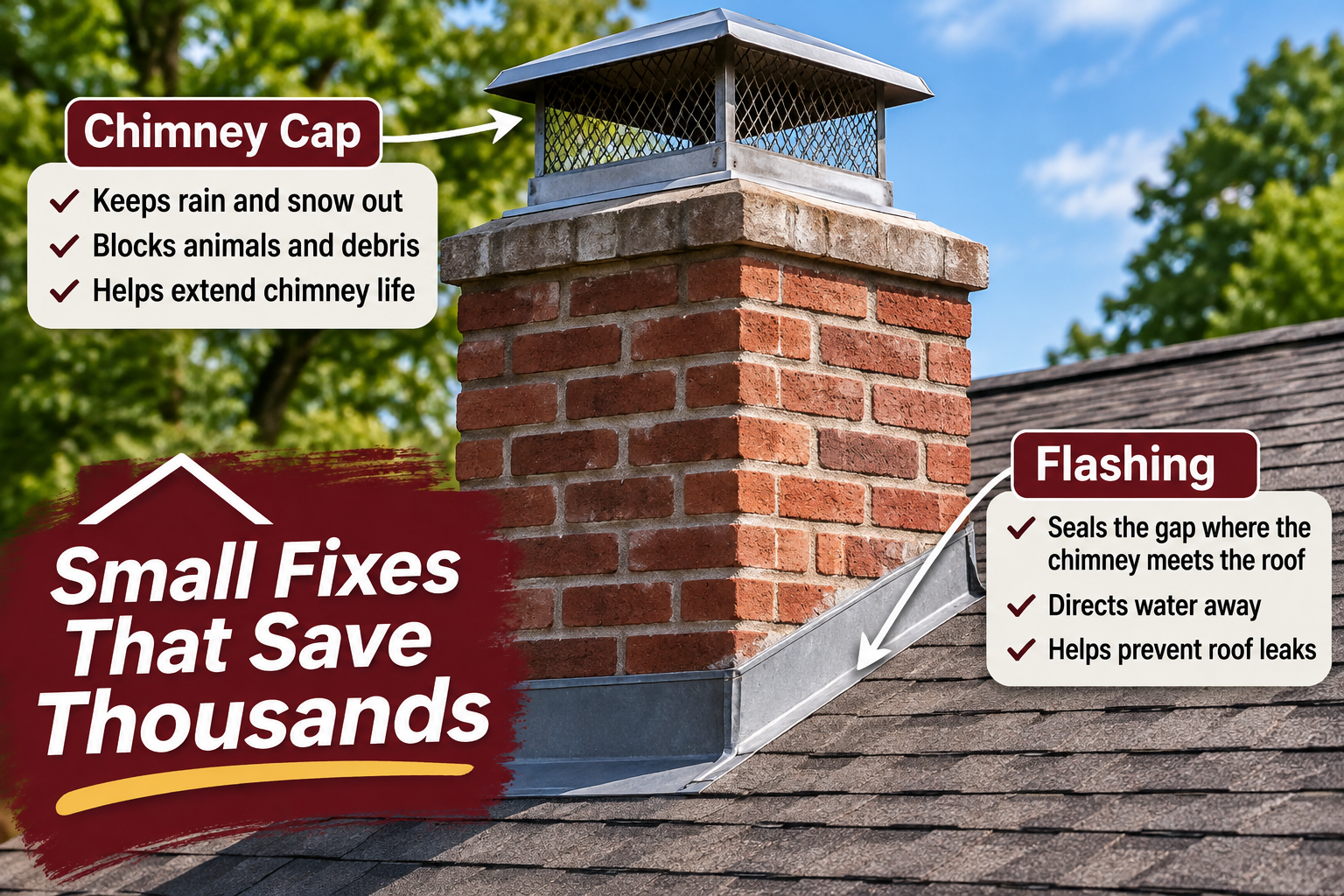
A chimney cap sits at the top of the flue, serving as a protective barrier against rain, snow, animals, and debris.
Without a properly installed cap, precipitation can enter directly into the chimney system. Over time, that moisture can damage the flue liner, rust metal components, and contribute to deterioration inside the chimney.
How Chimney Caps Protect Your Home
Prevent water intrusion: A properly sized chimney cap helps keep rain and snow from entering the flue, reducing moisture-related damage.
Keep animals out: Birds, squirrels, and other small animals can enter uncapped chimneys and create nesting obstructions.
Reduce debris buildup: Leaves, branches, and other materials can enter exposed chimney openings and interfere with proper ventilation.
Help control sparks: Many chimney caps include mesh designed to help limit the escape of larger burning embers.
Extend chimney lifespan: Reducing direct water exposure can help protect the chimney liner, firebox components, and surrounding masonry.
For homeowners throughout Milton and Janesville, chimney cap installation is a relatively straightforward preventative measure that can help avoid significant repairs later.
Chimney Flashing: Your Roof's First Defense Against Leaks
While chimney caps protect the opening at the top, chimney flashing protects the vulnerable area where the chimney meets your roof.
Flashing consists of metal components installed around the chimney to direct rainwater away from the roof penetration. Proper installation typically includes step flashing along the sides of the chimney and counterflashing integrated into the masonry.
When properly installed, these components work together to prevent water from entering between the chimney and roofing materials.
Common Signs of Damaged Chimney Flashing
Homeowners should watch for:
- Rusted, bent, or loose flashing
- Missing or deteriorated sealant
- Gaps between flashing and brickwork
- Water stains near the chimney inside the attic
- Ceiling discoloration around the fireplace
- Damp insulation near the chimney
- Water entering during heavy rain or snowmelt
One of the biggest mistakes homeowners make is assuming a roof leak means they need a new roof.
Sometimes the roofing materials are still in good condition, and the actual problem is damaged chimney flashing.
Identifying and repairing that specific issue may prevent the need for more extensive work.
Bollerud & Sons Masonry provides chimney flashing repair and waterproofing to help protect homes from moisture intrusion.
How Wisconsin Freeze-Thaw Cycles Make Chimney Problems Worse
Southern Wisconsin's changing temperatures create additional challenges for brick chimneys.
During warmer periods, rain and melting snow can enter cracks in mortar joints, chimney crowns, and other vulnerable areas. When temperatures drop below freezing, absorbed water expands and places pressure on the surrounding masonry.
Repeated cycles can cause brick faces to break apart, mortar joints to crumble, and existing cracks to widen.
A missing chimney cap or damaged flashing can increase the amount of moisture entering these vulnerable areas.
Over time, homeowners may notice:
- Loose or missing mortar
- Cracked chimney crowns
- Flaking or spalling brick
- White staining on exterior masonry
- Water damage around the fireplace
- Deterioration near the chimney's roofline
When mortar joints begin to fail, tuckpointing and chimney restoration can help restore the masonry before more extensive rebuilding becomes necessary.
Why Caulking Alone Is Not Always the Answer
When homeowners discover a chimney leak, a common reaction is to apply additional caulk or roofing cement around the flashing.
While appropriate sealants have their place, repeatedly covering damaged flashing with caulk is not a reliable long-term repair.
Metal flashing expands and contracts with temperature changes. Sealant can deteriorate, separate, or crack, allowing water to enter again.
If the flashing was installed incorrectly or has pulled away from the masonry, the underlying problem needs to be corrected.
A lasting repair may involve replacing damaged metal, installing proper counterflashing, repairing surrounding mortar, and ensuring water is directed onto the roof surface.
Fixing the actual cause of the leak is more effective than continually patching the symptoms.
Don't Forget the Chimney Crown and Mortar Joints
Chimney caps and flashing are essential, but they are only part of a complete chimney protection system.
The chimney crown, located at the top of a masonry chimney, helps direct water away from the brickwork below. When crowns crack or deteriorate, moisture can enter the masonry and contribute to freeze-thaw damage.
Likewise, missing or weakened mortar joints can allow water penetration even when the chimney has a properly installed cap.
A preventative chimney inspection should examine the entire structure, including the cap, crown, flashing, brick, mortar joints, and visible flue components.
When Should Milton Homeowners Schedule a Chimney Inspection?
While chimney problems can develop throughout the year, fall is an especially important time to check chimney caps, flashing, and exposed masonry.
An inspection before winter can identify problems that might worsen during snow accumulation, ice formation, and repeated freezing temperatures.
Homeowners should also consider an inspection after severe storms, especially when strong winds or falling branches may have damaged the chimney cap or flashing.
Warning signs that deserve attention include:
- Water stains near the fireplace
- A musty smell coming from the chimney
- Rust on the damper or fireplace components
- Visible damage to chimney flashing
- Missing or loose chimney caps
- Crumbling mortar joints
- Brick fragments collecting on the roof
- Moisture appearing after heavy rain
Even if your fireplace is rarely used, the chimney remains exposed to the elements year-round.
Protecting Older Homes in Milton, WI
Milton and surrounding Southern Wisconsin communities feature a wide range of homes, including older properties with traditional masonry chimneys.
These chimneys may have experienced decades of Wisconsin winters, previous roof replacements, mortar repairs, or changes to the home's heating system.
Older chimneys deserve particular attention because their mortar, flashing connections, and masonry components may no longer provide the protection they once did.
For historic properties, proper repairs should preserve the original masonry whenever possible while addressing water intrusion and structural concerns.
Bollerud & Sons Masonry serves homeowners in Milton, Janesville, Edgerton, Whitewater, Fort Atkinson, Beloit, and surrounding Southern Wisconsin communities. The company provides chimney repairs, tuckpointing, cap installation, flashing repairs, and masonry restoration.
Small Chimney Repairs Today Can Prevent Big Expenses Tomorrow
A missing chimney cap or damaged flashing may not seem urgent, especially when there are no visible leaks inside the home.
But moisture problems rarely improve on their own.
The longer water enters through an unprotected chimney or deteriorated roof connection, the greater the potential for damaged masonry, roof decking, insulation, and interior finishes.
Preventative chimney maintenance is about protecting the entire home, not just keeping the fireplace in working condition.
Schedule Chimney Cap and Flashing Repairs in Milton, WI
Don't let a small chimney problem turn into a major roofing or water damage expense.
Bollerud & Sons Masonry is a family-owned masonry company serving Milton, WI and surrounding Southern Wisconsin communities. Whether you need a chimney cap replaced, flashing repaired, deteriorating mortar restored, or a complete chimney inspection, their team can help identify problems and recommend appropriate repairs.
Protect your roof, preserve your chimney, and avoid unnecessary repair expenses.
Contact Bollerud & Sons Masonry at 608-868-2634 to request a chimney evaluation or free estimate.
Related Articles
Related Articles

STAY UP TO DATE
GET PATH'S LATEST
Receive bi-weekly updates from the church, and get a heads up on upcoming events.
Contact Us