
Article
Boost Your Fireplace’s Lifespan with Regular Chimney Sweeping and Caps
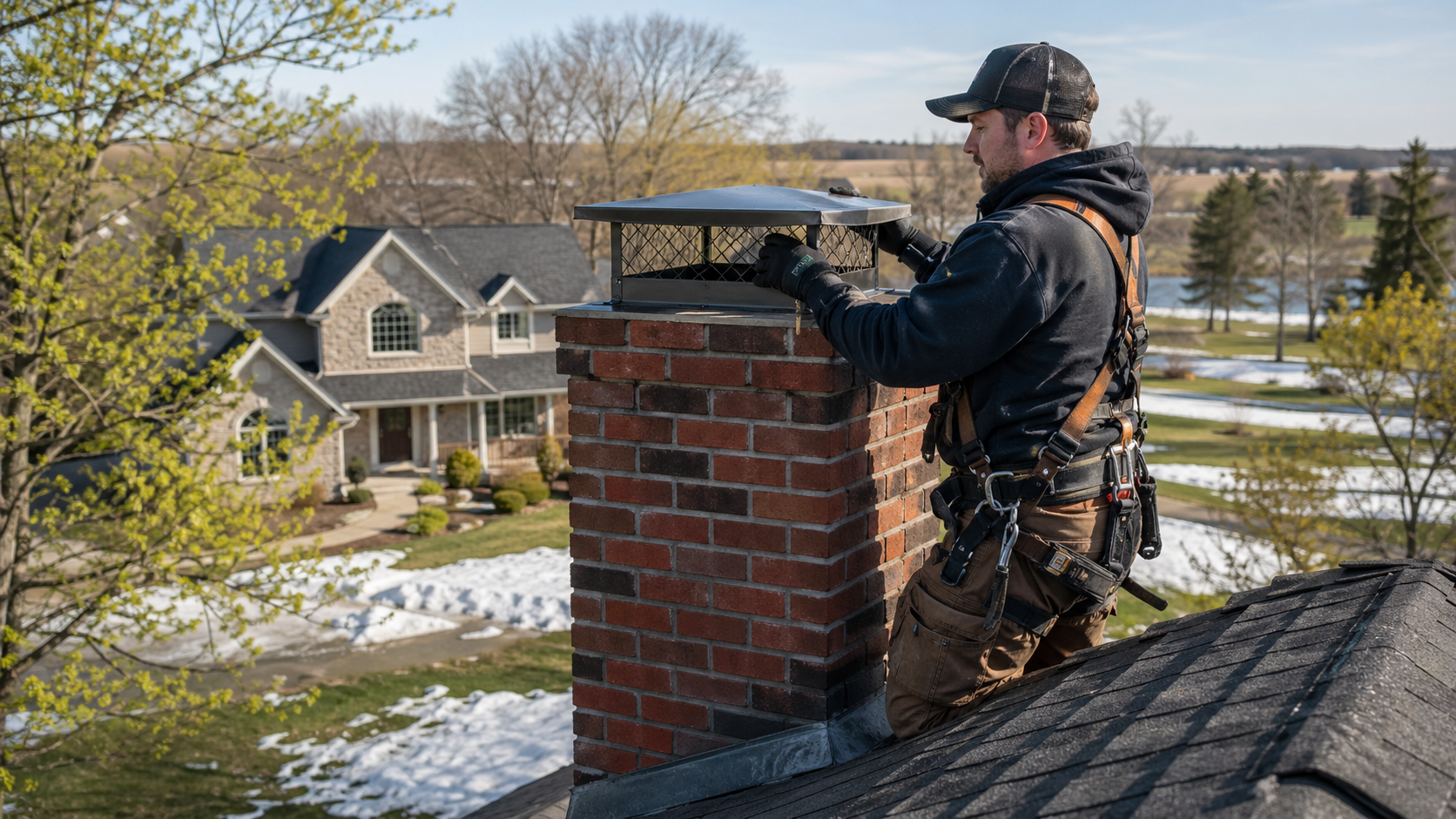
An April maintenance move that improves safety, reduces repairs, and helps your chimney last longer.
April is the ideal time to take care of your chimney. You’ve just wrapped up peak fireplace season, and any soot, creosote, moisture damage, or minor venting issues are now visible—before summer humidity and storms make them worse. If you want your fireplace and chimney system to last for decades (not just a few seasons), two standard services do the heavy lifting: professional chimney sweeping and a properly installed chimney cap.
This guide breaks down why these services matter, what they prevent, and why handling them in April is a smart, durability-focused decision for Southern Wisconsin homeowners.
Why April is the best month to schedule chimney sweeping and cap checks
A lot of chimney damage happens quietly—then shows up later as leaks, odor, draft issues, or expensive masonry repairs. April is the right time to get ahead of it because:
- Winter buildup is fresh: Creosote and soot accumulate during heavy use months.
- Freeze-thaw stress just happened: Mortar joints, crowns, and flashing may have taken a hit.
- Spring rain is coming: Water entry becomes a major risk without a cap and tight masonry.
- Scheduling is easier: You avoid fall rush pricing and long wait times.
If your fireplace was used consistently from November through March, sweeping in April is not optional maintenance—it’s damage prevention.
How chimney sweeping boosts fireplace lifespan
Chimney sweeping isn’t just “cleaning out soot.” It’s removing creosote, a flammable byproduct of burning wood, and identifying early wear before it turns into structural failure.
1) Reduces chimney fire risk
Creosote can ignite. That ignition can crack flue tiles, damage liners, and compromise brick and mortar. Even “small” chimney fires can cause big structural consequences you don’t see from the living room.
2) Improves draft and performance
A clean flue vents better. Better venting means:
- Less smoke entering the home
- More consistent fires
- Reduced carbon monoxide risk
3) Prevents corrosive moisture damage
Soot + moisture = acidic compounds. That combination breaks down masonry, damages liners, and accelerates deterioration—especially during Wisconsin spring humidity swings.
Bottom line: Sweeping extends the functional life of your chimney system and lowers the odds you’ll need major repairs.
Why chimney caps matter for durability and safety
If chimney sweeping is the “internal maintenance,” a chimney cap is the external protection that prevents the most common causes of early chimney failure.
1) Stops water intrusion (the #1 masonry killer)
Rain entering an uncapped chimney can soak:
- The flue
- Smoke shelf and damper area
- Firebox components
- Masonry joints near the top of the stack
Once water gets into masonry, freeze-thaw cycles do the rest: cracking, spalling brick, and mortar joint loss.
2) Keeps animals and debris out
Birds, squirrels, and raccoons can nest in chimneys. Nests restrict airflow and create serious safety issues.
A cap prevents:
- Blockages
- Odors
- Fire hazards from nesting material
- Unexpected interior messes
3) Helps prevent downdrafts and wind issues
Quality caps can reduce wind-driven downdrafts that push smoke back into the home—especially in gusty spring weather.
4) Adds a spark barrier
Many caps include mesh that helps reduce stray embers exiting the flue—an added safety layer for roofs and nearby combustibles.
Common signs you need sweeping, a new cap, or both
If you’re noticing any of the following, schedule service soon:
- Smoky smell lingering after fires
- Poor draft or smoke entering the room
- Black residue around the fireplace opening
- White staining on the exterior brick (efflorescence)
- Rusted damper or firebox components
- Water stains near the fireplace or chimney chase
- No cap (or a cap that’s loose, rusted, or missing sections)
- Animal noises or debris falling into the firebox
How sweeping + caps work together as a “standard durability package”
Homeowners often treat these as separate services. They shouldn’t.
- Sweeping removes the fuel source for chimney fires and improves venting.
- Caps prevent water, animals, and debris from reintroducing hazards and deterioration.
Together, they reduce the three biggest lifespan killers:
- Fire damage
- Water intrusion
- Blockages and airflow restriction
If your goal is longevity (not just “it works for now”), this pairing is the most cost-effective move you can make annually.
April chimney maintenance checklist (SEO-friendly quick hit)
Use this as your April action list:
- Schedule a professional chimney sweep
- Inspect the chimney cap and replace if rusted, loose, or missing
- Check crown and flashing for cracking or separation
- Look for spalling brick and mortar joint deterioration
- Confirm the damper opens/closes smoothly and isn’t rusted
If you want a single visit that covers cleaning plus a durability-focused inspection, ask for sweeping and cap evaluation together.
Frequently asked questions
How often should a chimney be swept?
Typically once per year if you use your fireplace regularly. If you burn daily during winter or burn wood that isn’t properly seasoned, you may need it more often.
Do gas fireplaces need chimney sweeping?
Often, yes—especially if you have venting issues, residue buildup, or moisture concerns. Gas systems still need vent inspections, and caps still matter.
Is a chimney cap really necessary?
If you care about durability: yes. Water and animals cause preventable damage. A cap is one of the simplest upgrades with a high payoff.
Schedule chimney sweeping and cap service in April in Southern Wisconsin
April is when smart homeowners protect what winter just worked hard. Regular chimney sweeping and a quality cap aren’t “extras”—they’re standard services that directly improve safety and extend the life of your chimney and fireplace system.
Related Articles
Related Articles

STAY UP TO DATE
GET PATH'S LATEST
Receive bi-weekly updates from the church, and get a heads up on upcoming events.
Contact Us